


How to Relieve Tension Headaches Safely at Home

By mid-afternoon, a tight band of pressure across the forehead or around the temples can make even routine work feel difficult. If you are trying to relieve tension headaches, it helps to look beyond the pain itself. For many people, headaches build after hours at a desk, driving, training, carrying children, sleeping awkwardly or holding tension through the neck, jaw and shoulders.
Tension-type headaches are common, but they should not simply be accepted as part of a busy week. A clear understanding of your symptoms, sensible self-care and an individual assessment when headaches persist can help you move more comfortably and identify patterns worth changing.
What does a tension headache feel like?
Tension headaches are often described as a steady, pressing or tightening feeling on both sides of the head. Rather than throbbing, the discomfort can feel like a band around the head, pressure behind the eyes or a dull ache that spreads from the upper neck and shoulders towards the temples.
They can last from 30 minutes to several hours, and sometimes longer. Some people notice them after a demanding day; others wake with a headache after poor sleep or jaw clenching overnight. Neck stiffness, sore shoulder muscles and reduced concentration are common companions.
Headaches can have more than one contributor. Long periods in one posture may be relevant, but posture is not the whole story. Stress, reduced sleep, dehydration, skipped meals, visual strain, changes in training load and jaw tension can all play a part. A good plan considers the combination that applies to you rather than blaming a single cause.
Ways to relieve tension headaches in the moment
When a headache starts, the aim is to reduce irritation without forcing your body through a painful routine. A short break can be more useful than trying to push through another hour at the screen.
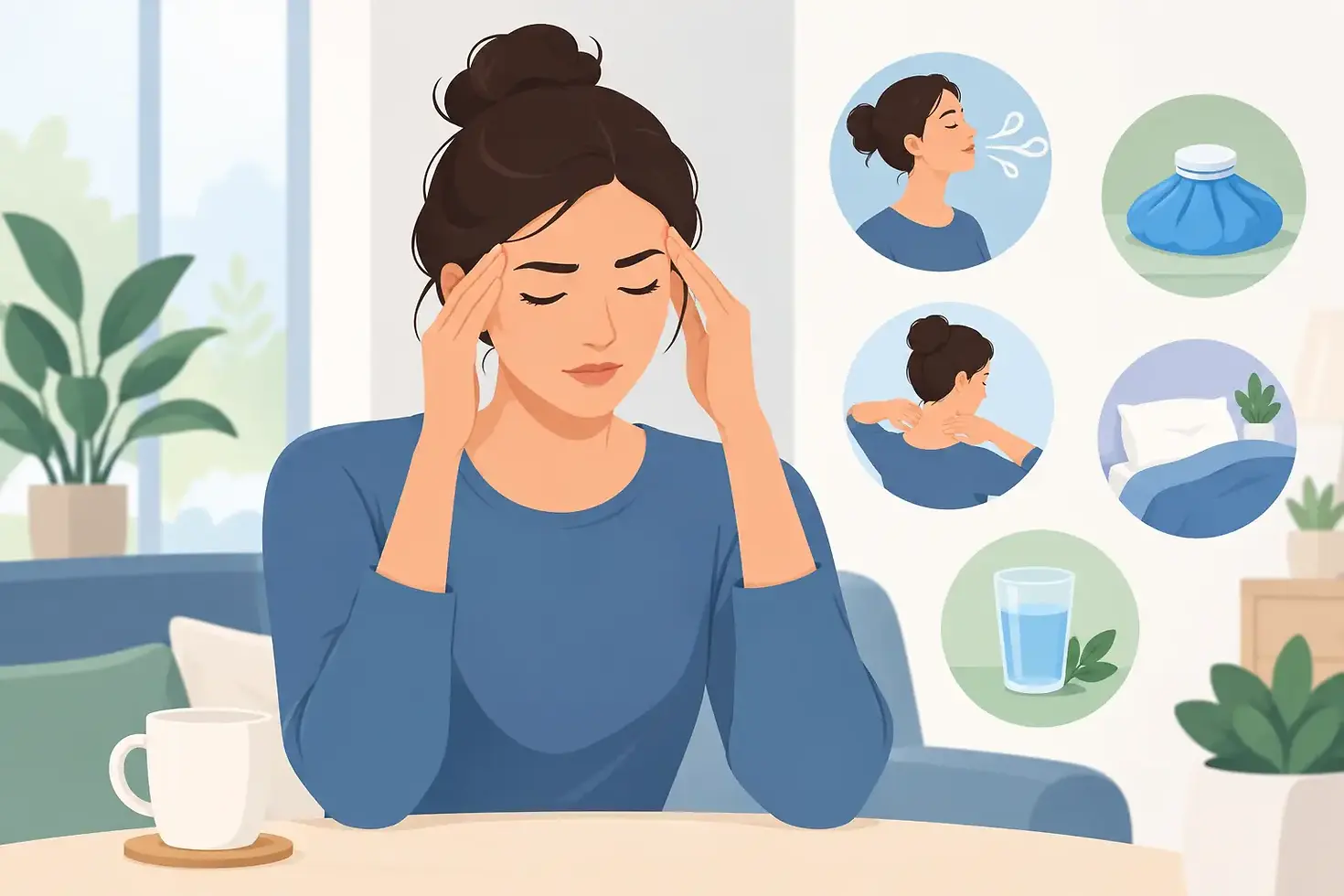
Start by changing position. Stand up, walk for a few minutes and let your arms swing naturally. If you have been looking down at a laptop or mobile, bring your gaze to the horizon and take slow, comfortable breaths. Avoid aggressive neck stretching or repeatedly cracking your neck, particularly if movement makes the pain sharper or causes dizziness.
Gentle heat can help ease tight muscles around the neck and upper shoulders. A warm shower, heat pack or wheat bag used according to its instructions may be useful for 10 to 15 minutes. Some people prefer a cool pack across the forehead. Choose the option that feels more settling, and protect your skin with a cloth barrier.
Hydration and food are worth checking too. A large gap between meals, a long coffee-fuelled morning or a hard gym session without enough fluid can lower your tolerance for discomfort. Have water and a balanced snack if you have not eaten for several hours. If you use pain relief medicine, speak with a pharmacist or GP about what is suitable for you. Frequent use of headache medication can contribute to medication-overuse headaches in some people.
A simple reset for your upper body may also help. Sit tall without rigidly forcing your shoulders back, let the shoulders drop, then slowly turn your head from side to side within a comfortable range. Follow this with a few shoulder rolls. The goal is relaxed movement, not a bigger stretch.
Address the neck, shoulders and jaw
The neck is not always the source of a tension headache, but it is commonly involved. Sitting with the head held forward, gripping the steering wheel during traffic, or spending hours with the shoulders elevated can leave the muscles around the upper neck working harder than they need to.
Set up your usual work position so the top third of your monitor is close to eye level and your keyboard and mouse are easy to reach. This does not mean you need a perfect posture all day. Bodies generally cope best with variety. Change position regularly, take brief movement breaks and alternate sitting with standing if your work allows it.
Jaw clenching deserves attention, especially if headaches are worse on waking or you notice tooth sensitivity, jaw clicking or tension around the temples. Resting your tongue gently on the roof of the mouth behind the front teeth, with lips together and teeth apart, can be a useful cue during the day. Persistent jaw symptoms may also need assessment by a dentist or GP.
For active people, headaches can occur when training is increased quickly, when recovery is poor or when the neck and shoulders stay tense during lifting, cycling or running. Reducing intensity temporarily, checking technique and building load gradually is often more productive than stopping movement altogether.
When recurring headaches need an assessment
If tension headaches are becoming frequent, changing in character or interfering with work, sleep, parenting or training, an assessment can help clarify what is contributing. This is particularly useful when headaches occur alongside neck pain, restricted movement, a recent injury or recurring shoulder tightness.
At Enliven Integrative Health, care begins with a detailed history of your headache pattern, general health, activities, past injuries and any triggers you have noticed. A chiropractor will then assess relevant areas, which may include neck movement, muscle tenderness, posture, shoulder function and neurological signs. Safety screening is part of this process, because not every headache is musculoskeletal in origin.
Where appropriate, treatment may include hands-on joint techniques, soft-tissue therapy and guidance on movement, work setup and exercises suited to your presentation. Treatment is tailored rather than delivered as a standard sequence. Your response is reviewed at follow-up appointments, allowing the plan to change as your symptoms, function and goals change.
Chiropractic care is not a replacement for medical assessment where that is needed. Your practitioner may recommend that you see your GP, dentist, optometrist or another health professional if your history or examination points outside the scope of chiropractic care. That referral is a useful part of safe, patient-centred care.
Know the warning signs
Most headaches are not an emergency, but a severe or unusual headache should not be managed as a routine tension headache. Seek urgent medical help, including calling 000 where appropriate, if you experience a sudden severe headache that peaks quickly, headache after a significant head injury, new weakness or numbness, difficulty speaking, fainting, confusion, seizure, loss of vision, fever with a stiff neck, or a headache during pregnancy or after birth that is severe or different from usual.
Arrange prompt medical review for a new headache after age 50, a steadily worsening pattern, headaches that wake you regularly from sleep, headaches linked with cancer or immune conditions, or symptoms such as unexplained weight loss. Trust the change in your usual pattern. If something feels distinctly different, it is worth getting checked.
Build habits that reduce the build-up
The most useful prevention plan is usually small enough to repeat. A five-minute walk between meetings, regular meals, a consistent wind-down before bed and short movement breaks can make more difference than an occasional intense stretching session. If your workload is high, schedule these breaks rather than relying on memory once the day becomes busy.
Keeping a brief headache note for two to three weeks can reveal patterns. Record when the headache began, what you were doing beforehand, where you felt it, sleep quality, meals, hydration, stress and any treatment that helped. The purpose is not to monitor every detail forever. It is to give you and your practitioner clearer information about what is worth adjusting.
You do not need to wait until discomfort becomes constant to seek advice. A headache that repeatedly arrives at the end of the day is your body asking for a closer look at load, recovery and movement. With the right assessment and a practical plan, you can make room for clearer, more comfortable days.


Comments